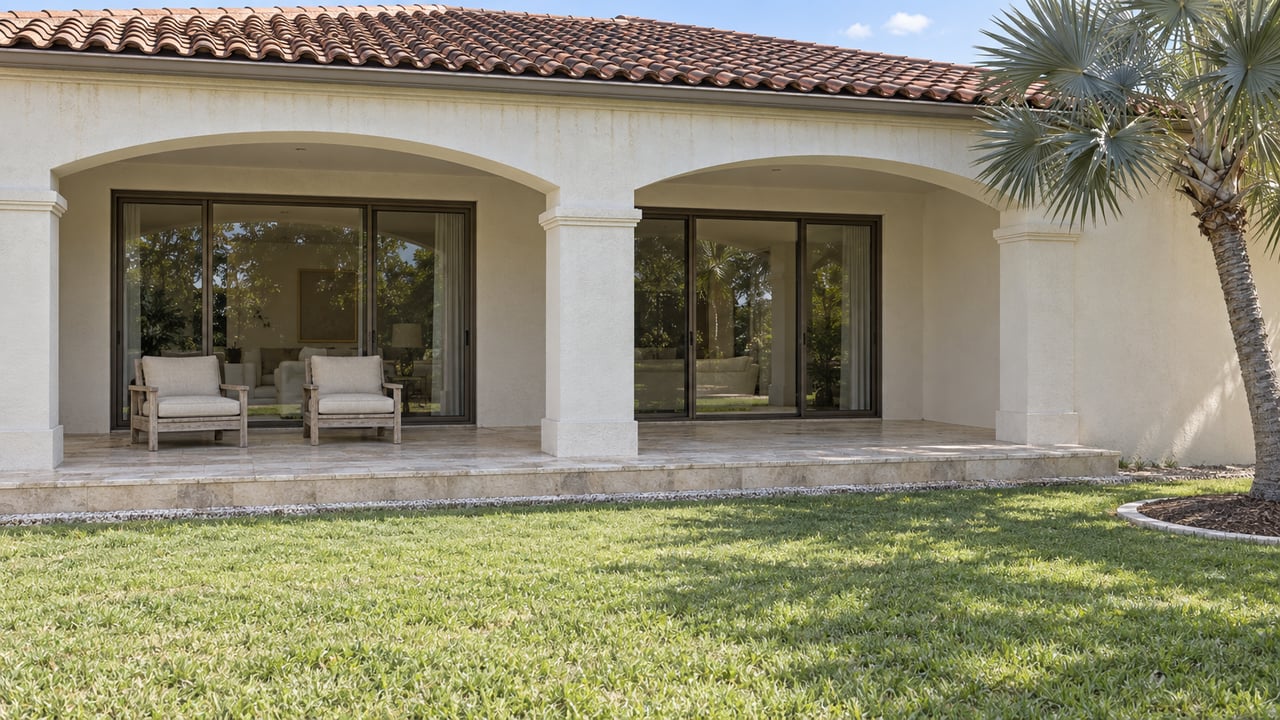
What Polo West Reveals About Buying a Golf Course View in Wellington
What would it cost the neighbors to keep a closed golf course green? For one Wellington property, Florida law now answers with a formula. The neighbors would have 90 days to act. The price would be capped by what the developer paid plus 10 percent, or by a recent outside offer if that figure is higher.
The property is the former Polo West Golf Course, a 150.5-acre site at 2470 Greenview Cove Drive. BH Group, an Aventura-based developer led by Isaac and Liat Toledano, closed on it for $20.8 million in May 2026 after settling a lawsuit with the seller, an entity managed by Glenn Straub. BH has said it plans a luxury single-family community there, according to The Real Deal. Previous owners tried to redevelop the course several times, and none of those plans came to anything. This attempt is different because the state rules changed this spring.
Florida's Infill Redevelopment Act, CS/CS/SB 1434, was signed May 21, 2026 and took effect immediately. If a qualifying parcel includes former recreational land, such as a golf course, and single-family homes border that land on every side, the developer must send certified-mail notice to adjacent owners. The notice gives them 90 days to buy the land and keep it as open space or recreation.
The terms are strict. Owners who use the option must close within those 90 days and accept a deed restriction or covenant that keeps the land as recreation or open space for at least 30 years. The price can't be more than the greater of two figures:
At Polo West, the first figure works out to roughly $22.9 million, based on the $20.8 million closing price. The second figure could matter more. In August 2026, the South Florida Business Journal ran a headline saying GL Homes has Polo West under contract. The article itself is paywalled. The seller, price, and home count in that deal could not be confirmed. Under the statute, though, an offer made within the past 12 months can set the price ceiling. So any active contract on a course is directly tied to what neighbors might be asked to pay.
That reverses what most buyers assume about a golf view. People tend to think zoning protects it, or the HOA, or a public hearing where neighbors can object. On a qualifying parcel in Palm Beach County, the main protection left is the option to buy the land outright, on a short deadline, at a price capped by the developer's own deal or a recent offer.
The Act only applies to "environmentally impacted" land. That means a parcel where a Phase II environmental site assessment found a contaminant above residential cleanup target levels, or a parcel inside a designated brownfield area. The parcel must also be at least 5 acres and sit next to land in the same jurisdiction that is zoned residential by right.
Old golf courses often meet that test. In its April 2026 coverage, the Sun Sentinel reported that shuttered courses regularly test positive for elevated arsenic and other substances left from past chemical treatment. One attorney it quoted said golf courses "have a tradition, or a history, of having environmental impacts related to the application of pesticides and herbicides."
Once a parcel qualifies, the local government must permit residential use "notwithstanding any local law, ordinance, or regulation." A compliant application must be approved administratively, with no further action by the governing body. A Senate Judiciary analysis says only three counties currently meet the population and municipality thresholds: Miami-Dade, Broward, and Palm Beach.
The result is unusual. For a closed course in Wellington, contamination found in a soil test can be what opens the faster path to homebuilding. That shifts the questions a golf-view buyer should ask. Is the course still operating, and has anyone tested the soil?
Polo West shows how much rested on the old public process. The course opened in the 1980s as Greenview Cove Golf Course, built as the centerpiece of a planned residential golf community.
| Year | Owner | What happened |
|---|---|---|
| 2003 | Glenn Straub acquires the course | Golf use eventually ends, and the site is used mainly for temporary activities such as polo training and jumping events |
| 2017 | Straub | Seeks new road access and equine sports uses; Village Council rejects it unanimously in December |
| 2019 | Dr. Scott Swerdlin's Wellington Equestrian Estates LLC | Buys for $16 million with seller financing |
| 2022 | Swerdlin entity | Files a land-use amendment to allow up to 125 homes |
| 2025 | Straub entity, back in control | BH Group sues in December to force a sale |
| 2026 | BH Group | Closes for $20.8 million in May; a GL Homes contract is reported in August |
In 2017, the Polo West Estates homeowners association opposed Straub's request. Residents raised concerns about events, access, and the residential character of the area, and the Village Council voted it down. In 2020, some Polo West Estates residents told the Town-Crier they opposed housing and wanted golf back. The 2022 filing asked to change the land-use designation from Open Space Recreation to Residential C, which allows one to three units per acre. It proposed 80 to 125 homes, but the master-plan amendment needed to schedule hearings was never filed. Straub regained the property after that project failed to move forward.
For two decades, the neighbors' main leverage at Polo West came through public hearings. If a project qualifies under SB 1434, that hearing step largely goes away.
The Village still has a role, but a narrower one. In July 2026, Wellington Planning, Zoning & Building Director Tim Stillings told the Town-Crier that BH Group had given the Village documentation on how the property meets the Act's criteria. The paper reported that a project using the Act would likely not go through the Village's full public hearing process. Staff would still check proposals against local development standards and the statute. Village Manager Jim Barnes called the site "one of the most significant redevelopment opportunities in Wellington in many years."
The statute sets the remaining limits:
Wellington has a page for SB 1434 on its website. As of this writing, no reporting has confirmed that Polo West notices were mailed, made Phase II results public, or given a home count for the GL Homes deal. The outcome is still open.
The Polo West Estates guide gives one more detail. It says homeowners stopped holding an equity stake in the course after it was sold in 2000. The same guide notes that the HOA owned the entrance road. Owning a road or having a view gives no control over the green itself. Before paying more for a fairway lot anywhere in Wellington, a buyer can ask:
Does the Act apply to golf courses that are still open? For courses bordered by single-family homes on all sides, the recreational facilities must have been out of use for at least 12 consecutive months, and the parcel must also meet the environmental test.
Could neighbors realistically buy a course? The statute lets them, but they have 90 days to close and must accept a 30-year open-space restriction. At Polo West, the purchase-price branch of the cap works out to about $22.9 million, based on the May closing. A bona fide offer received within the prior 12 months could raise the cap above that figure.
Is affordable housing required? The Sun Sentinel reported that the bill's language does not require developers to build affordable housing.
If you're weighing a Wellington home on a golf course or open green, Lynda Molina can help you put these questions to the seller, the HOA, and your title professional before you write an offer, so the view you're paying for is one you understand. Let's Connect.
This article is general information, not legal, tax or financial advice. Consult a qualified professional about your situation.
Experience personalized service, strategic guidance, and a commitment to helping you achieve the best possible outcome in today's real estate market.